Home / Guides / Aruba Beaches
Aruba North Coast vs West Coast: Which Beaches Are for You?
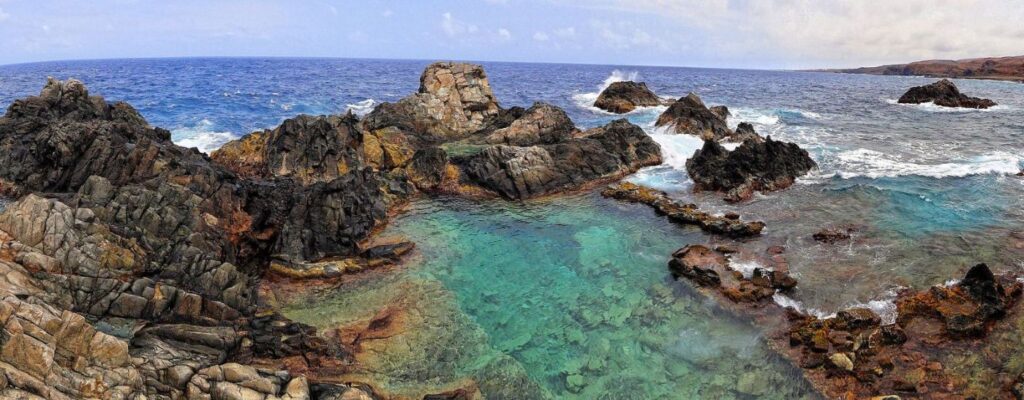
Aruba has two very different coastlines. The west side is the postcard: white sand, calm water, resorts and beach bars. The Aruba north coast is the opposite: wind, waves, cliffs, cactus and almost nobody around. Both are worth seeing. Only one is for swimming.
Here is how they compare and how to plan a day on each.
Why the two coasts are so different
It’s all about the trade winds. They blow steadily from the northeast across the Atlantic and hit the north and east coasts head-on. That side takes the waves and currents. The west and south coasts sit downwind, sheltered by the island itself, so the water there stays calm. Princess Cruises’ beach guide draws the same line: calmer, swimmable water on the leeward west and south, rougher surf and currents on the windward north and east.
The west coast: where you swim
This is where nearly all the swimming beaches are. In Your Pocket says it plainly: the leeward coast has all the swimming beaches.
- Eagle Beach: the widest beach in Aruba, with lots of parking, shade huts and the famous fofoti trees.
- Palm Beach: about two miles of white sand in front of the high-rise hotels, with calm water, piers, bars and watersports.
- Malmok and Boca Catalina: small coves with rocky edges and great snorkeling close to shore.
- Arashi: calm, shallow water near the California Lighthouse, with shade huts, a beach bar and a parking area close to the sand.
Who it suits: families, snorkelers, weak swimmers, anyone who wants a full beach day with food and a bathroom nearby.
The northwest coves around Malmok are also where most boat trips go. Our clear boat tour stops at the Antilla wreck, Boca Catalina and Tres Trapi, all on this calm side.
The Aruba north coast: where you look
The north and east coasts are rough. Big parts of this side are inside Arikok National Park, which covers about 20% of the island. AFAR describes a landscape of volcanic rock, cactus and sand dunes, and warns that the water can be rough enough that swimming is generally not encouraged.
What’s worth the drive:
- Andicuri Beach: a sandy cove framed by cliffs, reached by a dirt road. Aruba.com says it’s popular with bodyboarders for its stronger surf, and only experienced swimmers who know about currents should go in. No food or drinks, so bring your own.
- The Natural Bridge area: the famous bridge collapsed in 2005, but Aruba.com notes the smaller Baby Bridge right next to it is still standing.
- Bushiribana gold mill ruins: stone walls from the gold-mining era, right by the sea.
- Conchi (Natural Pool): a pool sheltered by volcanic rock inside Arikok. You need a 4×4 or a long hike, and VisitAruba warns that swimming is dangerous when the waves are high.
- Boca Grandi: on the southeast end, a kitesurfing beach. In Your Pocket says it is not a swimming beach due to strong currents.
Who it suits: photographers, hikers, people with a 4×4 or a tour booked, and anyone who has done three beach days and wants to see the wild side.
Is the north coast safe to visit?
Yes, as long as you treat it as a sightseeing coast. The risk is the water, not the land. Stay out of the sea unless the conditions are clearly calm and posted signs allow it. Keep kids close near the edges of the cliffs and rocks, where waves can splash up without warning.
What about the south coast?
The south end is somewhere in between. Mangel Halto, about 20 minutes from Oranjestad, is a sheltered lagoon with mangroves, though Aruba.com warns of strong currents farther out and doesn’t recommend it for weak swimmers. Baby Beach, at the far southern tip, is a shallow lagoon that In Your Pocket describes as having no currents or waves, which makes it great for small kids. Stay inside the marked snorkel area where the bay opens to the sea. Boca Grandi, just around the corner on the windward side, is a different story, so don’t confuse the two.
Wildlife to look out for
The north side has its own wildlife. VisitAruba notes that shoco owls, Aruba’s small native owls, nest in the dirt and rock around the California Lighthouse and along the north coast. Stay on marked paths and give them space.
North coast vs west coast at a glance
| West coast | North coast | |
|---|---|---|
| Water | Calm, clear, shallow in places | Rough, currents, waves |
| Swimming | Yes | Mostly no, check signs |
| Snorkeling | Excellent near Malmok and Arashi | Not recommended; Conchi is for a dip on calm days |
| Facilities | Bars, rentals, bathrooms | Few or none |
| Access | Paved roads, buses | Dirt roads, 4×4 helpful |
| Crowds | Busy at peak times | Quiet |
Planning a north coast day
- Go with the right vehicle. Some roads are rough dirt. A 4×4 or guided tour takes the stress out.
- Stay on the marked tracks. Aruba’s code of conduct prohibits driving on beaches and dunes, and asks drivers to stay on the main unpaved roads.
- Bring everything. Water, snacks, sunscreen and a hat. There is little or no shade or food along the way.
- Wear real shoes. The ground is rough and rocky.
- Respect the water. Read the signs and follow ranger advice. If it looks rough, stay out.
- Arikok hours: the park is open 8 am to 4 pm, according to VisitAruba, so plan to enter early.
The best plan: do both
Spend most of your trip on the west coast, then give one morning to the north side. Start early, finish by early afternoon, then cool off with a swim at Arashi or Eagle Beach on the way back. It’s the easiest way to see both sides of Aruba in one day.
Sources
- Princess Cruises: Aruba beaches
- In Your Pocket: Best beaches in Aruba, an honest guide
- AFAR: Aruba’s otherworldly north side
- Aruba.com: Andicuri Beach
- VisitAruba: Natural Pool (Conchi)
- Aruba.com: Palm Beach
- Aruba.com: Eagle Beach
- Aruba.com: Arashi Beach
- Wikipedia: Aruba
- VisitAruba: Arikok National Park
- Aruba.com (DE): Aruba Verhaltenskodex
- VisitAruba: Aruba beach etiquette 101
- Aruba.com: Natural bridges
- Aruba.com: Aruba’s top rated snorkeling beaches