Home / Guides / Plan Your Trip
Aruba Weather by Month: Temps, Rain and Wind in One Table
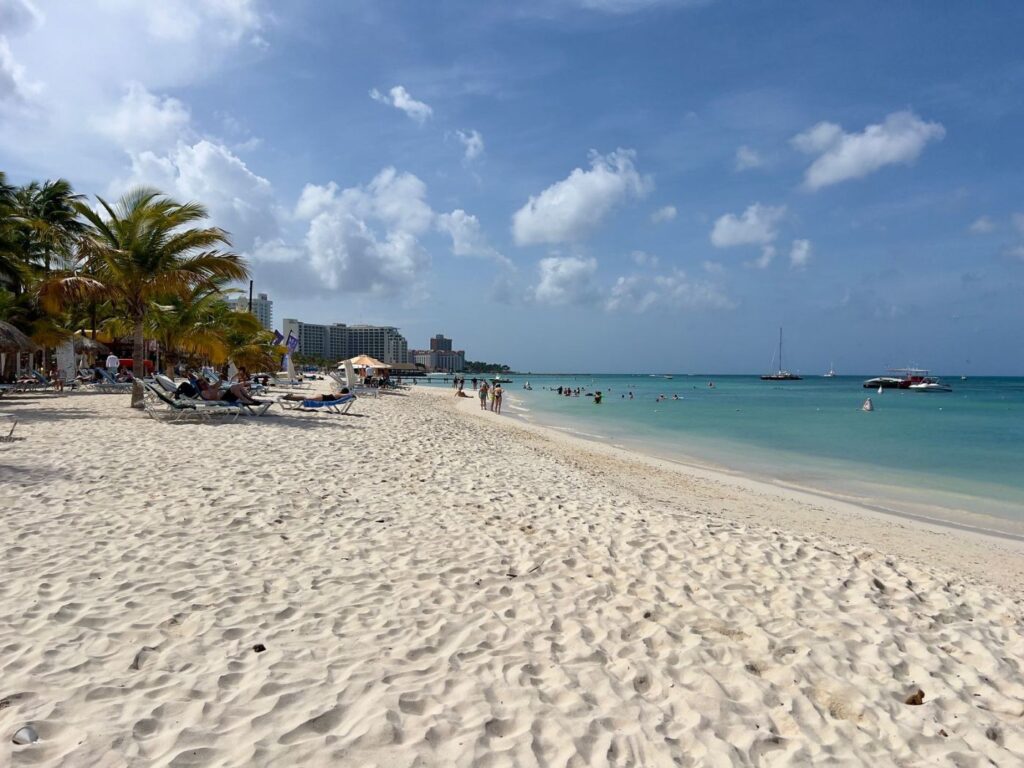
Aruba weather by month is a short story: hot, sunny and breezy, with a few more showers at the end of the year. The island has a semi-arid climate, and the long-term record shows about 16 inches of rain a year at the airport.
Still, the months are not identical. Wind, rain and sea temperature shift enough to matter for beach days, boat trips and what you pack. The table below pulls it together.
Aruba weather by month: the numbers
Air temperatures, rainfall, rain days and wind come from the official climate normals for Queen Beatrix Airport (1971 to 2000), published by the regional meteorological service. Sea temperatures are modeled averages from Weather Spark. Rain days count days with at least 1 mm of rain, which is often just a brief shower.
| Month | Avg high | Avg low | Rain | Rain days | Avg wind | Sea temp |
|---|---|---|---|---|---|---|
| Jan | 86°F / 30°C | 76°F / 24°C | 1.5 in / 37 mm | 8 | 16 mph | 79°F |
| Feb | 87°F / 30°C | 76°F / 24°C | 0.8 in / 19 mm | 4 | 17 mph | 79°F |
| Mar | 87°F / 31°C | 76°F / 25°C | 0.3 in / 8 mm | 2 | 17 mph | 79°F |
| Apr | 88°F / 31°C | 78°F / 25°C | 0.5 in / 13 mm | 2 | 18 mph | 79°F |
| May | 89°F / 32°C | 79°F / 26°C | 0.5 in / 14 mm | 2 | 19 mph | 81°F |
| Jun | 90°F / 32°C | 80°F / 26°C | 0.7 in / 18 mm | 3 | 20 mph | 81°F |
| Jul | 89°F / 32°C | 79°F / 26°C | 1.2 in / 31 mm | 5 | 19 mph | 81°F |
| Aug | 90°F / 32°C | 80°F / 26°C | 1.0 in / 25 mm | 5 | 18 mph | 82°F |
| Sep | 91°F / 33°C | 80°F / 27°C | 1.4 in / 35 mm | 4 | 15 mph | 83°F |
| Oct | 90°F / 32°C | 79°F / 26°C | 2.6 in / 65 mm | 7 | 13 mph | 83°F |
| Nov | 90°F / 32°C | 78°F / 26°C | 3.1 in / 78 mm | 10 | 13 mph | 82°F |
| Dec | 87°F / 30°C | 76°F / 25°C | 2.6 in / 66 mm | 11 | 15 mph | 81°F |
A newer set of normals for 1991 to 2020 is listed on the Departamento Meteorologico Aruba website. Treat these as a reliable guide to typical conditions, not a forecast.
What the table tells you
Temperature barely moves
The gap between the coolest and warmest month is only about two to three degrees Celsius. January and February are the “cool” months with highs in the mid 80s°F. August through October are the hottest, with highs around 90°F. Nights stay warm all year, rarely below the mid 70s°F.
What changes more is how the heat feels. The trade wind does a lot of work here. On a calm day in September, the same temperature feels noticeably heavier than on a breezy day in June.
The dry season and the short rainy season
The meteorological department describes a dry season from roughly February to June and a short rainy season from roughly September to January. March is the driest month on record. October through December carries most of the year’s rain, with November the wettest.
Even then, rain here is not like rain on greener islands. Showers often fall in the early morning, and in the rainy season sometimes in the evening. Even the wettest month averages only about three inches in total.
Wind peaks in early summer
June is the windiest month, averaging about 20 mph on the airport record, and the breeze stays strong through July. October and November are the calmest. If you are coming to kitesurf or windsurf, aim for May to July. If you want glassy water for snorkeling or paddleboarding, the fall months tend to be kinder.
The sea is always swimmable
Water temperatures sit around 79°F in the first months of the year and climb to about 83°F in September and October.
Month by month notes from the ground
- January: pleasant, breezy, a few showers left over from the rainy season. Carnival season is underway.
- February: dry and comfortable. Peak Carnival weeks in many years.
- March: the driest month. Very reliable beach weather.
- April: dry, sunny, wind starting to build.
- May: hot and dry, fewer visitors.
- June: the windiest month. Bring a hat with a strap.
- July: windy and hot, a touch more rain than spring.
- August: hotter, wind easing.
- September: among the hottest months, calm days feel steamy. Hurricane season peaks in the wider Atlantic.
- October: calm wind, warm sea, more showers.
- November: the wettest month on average, still mostly sunny.
- December: the most rain days on the record, but short ones. High season starts.
Packing by season
All year: light clothing, a brimmed hat, reef-safe sunscreen, sunglasses and water shoes for rocky entries.
December to February: a light layer for breezy evenings and air-conditioned restaurants.
May to July: something to hold your hat on, and clips for your beach towel. The wind is real.
September to November: a compact umbrella or light rain jacket for the odd shower, plus extra water. Calm days are hot.
About hurricanes
Aruba sits on the southern edge of the Atlantic hurricane belt, and storms rarely come close. A distant system can still bring a day or two of heavy rain or still, sticky air. See our full guide to Aruba hurricane season for the history and what to do if you are traveling between June and November.