Home / Guides / Plan Your Trip
Getting Around Aruba: Bus, Taxi Fares and Driving Rules
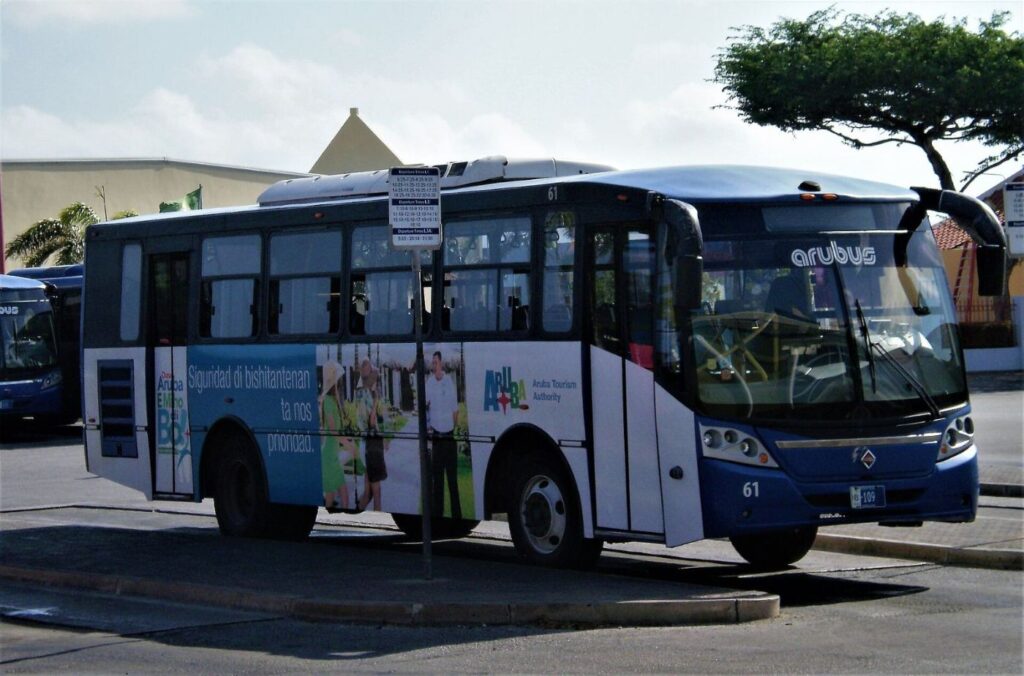
Getting around Aruba is easy because the island is small and the tourist side is mostly one long road along the west coast. Your choice comes down to three things: the Arubus public bus, a taxi, or a rental car. Most visitors end up mixing them.
Here is what each one costs, how it works, and when it makes sense.
Getting around Aruba: quick comparison
| Option | Cost | Best for | Downside |
|---|---|---|---|
| Arubus | $2.60 a ride, $15 day pass | Hotel strip, Oranjestad, beaches on the west coast | No luggage, slower, limited reach |
| Taxi | Fixed government fares | Airport transfers, dinners, nights out | Adds up over a week |
| Rental car | Varies by season | Exploring, San Nicolas, Baby Beach, Arikok | Parking in town, no dirt roads |
Arubus, the public bus
Arubus runs the island’s public buses from main stations in Oranjestad and San Nicolas. For visitors, the important one is Line 10 and its variants (10A, 10B, 10C), which run from the Oranjestad station along the hotel strip past Eagle Beach and Palm Beach up toward Arashi. Line 2 serves the airport on its way between Oranjestad and San Nicolas.
Fares at the time of writing:
- Single trip: $2.60 (AWG 4.50), cash accepted on board
- Retour (round trip) card: $5.00 (AWG 8.75)
- Day pass: $15.00 (AWG 26.25)
Day passes and retour cards are sold at the Arubus booth at the Oranjestad station and at several hotel gift shops along the strip, plus The Market Aruba. There is also a rechargeable smartcard if you are staying a while.
Two catches. Buses do not take luggage beyond carry-on items, so they are not an airport transfer for most people. And they are not yet wheelchair accessible. The Oranjestad station sits across from the cruise terminal, which makes the bus handy on a port day.
Want to reach San Nicolas? Ride Line 10 into Oranjestad and change to Line 1, 2 or 3A. For Baby Beach, ask Arubus about onward connections from San Nicolas.
Taxis
Aruba taxis have no meters. Fares are fixed by the government and were updated on May 20, 2026. Some examples for up to four passengers, before surcharges:
- Airport to Oranjestad: $26
- Airport to Eagle Beach: $37
- Airport to Palm Beach: $41
Surcharges to know: a flat $5 on Sundays, between 11 p.m. and 7 a.m., over the Christmas and New Year period and on listed holidays. Each passenger gets one standard bag and one carry-on free. Extra bags cost $3 each, and the minimum fare is $10.
The government’s site taxi.aw has a fare calculator, and the site also supplies QR codes for taxis, hotels and the airport that link to the official rates. A real taxi has “TX” on the plate. If you are overcharged, note the plate and file a complaint through taxi.aw.
You generally call or ask your hotel for a taxi rather than flag one down. Pay in dollars or florins; cash is the norm. Fares can change, so check taxi.aw before you ride.
Renting a car
A car gives you the whole island: the lighthouse, the east coast, San Nicolas murals, Baby Beach and quiet beaches the bus does not reach. You do not need one if you plan to stay on the hotel strip.
Who can rent: most companies want drivers to be 25 or older, though some accept 21 to 24 under special conditions. You need a license you have held for at least two years. A valid U.S. license is accepted.
Insurance: basic third party liability is required by law and included. A collision damage waiver may or may not be. Personal belongings in the car are not covered.
Where you cannot go: most rental agreements ban dirt roads to remote areas, such as behind the California Lighthouse or the track to the Natural Pool. Damage there is not covered. Driving on beaches and dunes is illegal. If you want the rough north coast, book a jeep tour.
Driving rules that catch visitors out
- Drive on the right.
- Speed limits are in km/h: 30 in urban areas, 60 out of town, 80 on faster roads.
- No right turn on red. This one gets a lot of Americans.
- In roundabouts, traffic already circulating has the right of way.
- At junctions with no signs, traffic from the right goes first.
- Seat belts for everyone. Children sit in the back, and under-fives need a child seat.
- Most gas stations are full service. At self-service pumps, pay inside first. Fuel prices are set by the government, so do not bother shopping around.
Watch for scooters, ATVs and the occasional goat on rural roads, and note that roads are less well lit than many visitors are used to. If you have an accident, do not move the car. Call the police on 100, then your rental company.
Parking in Oranjestad
Downtown uses parking meters from 7 a.m. to 7 p.m. There is a 15 minute grace period before a ticket, and cars can be towed after three hours. Yellow-striped spaces are for permit holders. Do not park along a yellow line or a solid center line.
Other options
Downtown Oranjestad has a small streetcar that links the cruise terminal with Main Street, handy for a short hop if it is running when you visit. And for the Arikok side of the island, a guided jeep or 4×4 tour is often easier than taking a rental car where it is not allowed to go.
My usual advice: bus or taxi for the first few days, then rent a car for one or two days to see the rest of the island.