Home / Guides / Tours & Activities
Arikok National Park 2026: Fees, Hours, Caves, Natural Pool
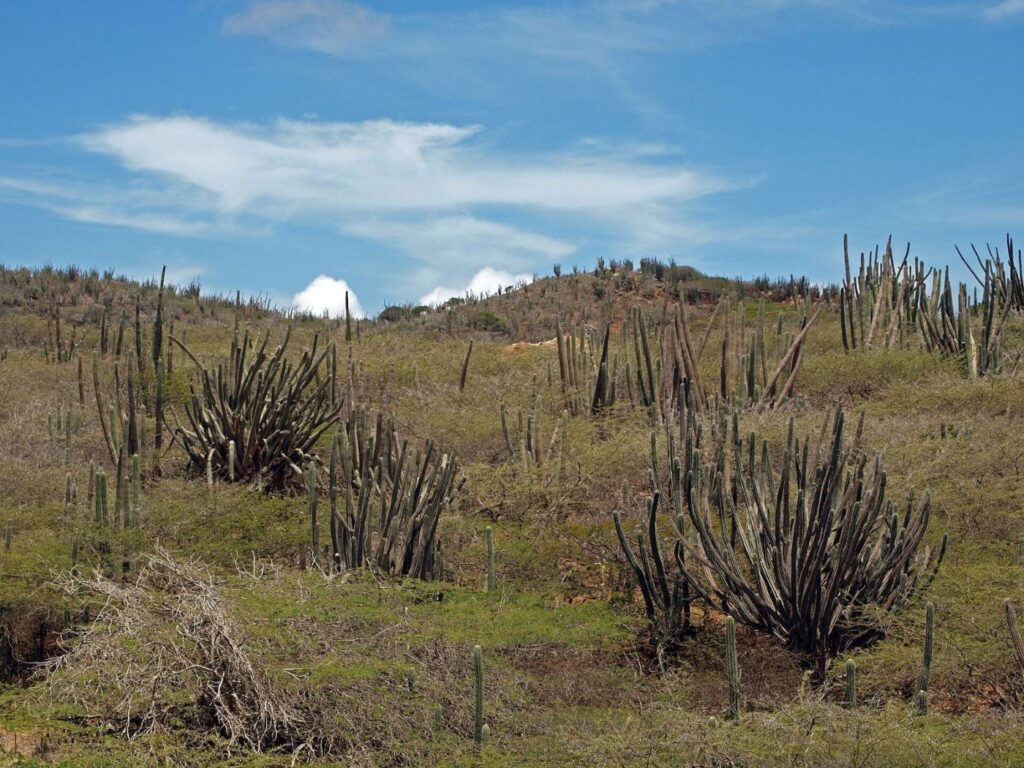
Arikok National Park covers close to a fifth of Aruba, and it is the part of the island most visitors never see. No resorts, no beach bars, just cactus, limestone, rust-coloured hills and a wild coastline where the trade winds hit hard. It is managed by the Aruba Conservation Foundation (ACF), and the details below come from their own pages at the time of writing.
Arikok National Park fees and hours
| Item | Details (ACF, at the time of writing) |
|---|---|
| Conservation day pass, adults | USD 22 per person |
| Children under 17 | Free |
| Residents of Aruba, Bonaire, Curaçao | Local discount with government photo ID |
| San Fuego entrance (Visitor Center) | 8:00 am to 3:30 pm daily |
| Vader Piet entrance | 8:30 or 9:00 am to 3:00 pm daily (ACF pages differ, so check before you go) |
| Guided ranger hikes | $25 guide fee, max 10 people |
A pass is required by law, and you buy it at the entrance. Some guides still quote an older, lower fee, so go by the ACF figure. An annual pass is also sold at the Visitor Center.
Arrive early. The park closes mid-afternoon, there is no lighting, and by noon the inland valleys feel like an oven.
Getting in and getting around
There is no public bus to the park. You can drive in, take a taxi to the Visitor Center at San Fuego, or book a jeep tour. Local guides recommend a jeep or SUV for the park’s rough roads and low gullies, and the track to the Natural Pool is for 4x4s only.
Rules worth knowing before you go:
- ATVs, UTVs and motorbikes are prohibited in protected nature areas.
- The speed limit is 20 km/h. Stay on park roads and park only in marked spots.
- No drones, no pets, no metal detectors, no rock stacking.
- Do not take plants, rocks or animals. Fines under the park law can be very large.
- Phone signal is patchy. Tell someone your plan.
The Natural Pool (Conchi)
Conchi is a ring of volcanic rock on the north coast that forms a sheltered pool while the open sea crashes on the other side. It is the most famous spot in the park and the hardest to reach. Options are a jeep tour, a 4×4 you drive yourself (check that your rental agreement allows it first), or a long hot hike. Horseback tours also go there.
Two things matter. First, the last stretch is a steep walk down rough steps, so wear proper shoes. Second, the pool depends on the sea. When warning signs are up for high waves or strong surge, do not get in. Tour operators note that access can be closed on rough days. And leave well before dark: rangers are not on duty after hours.
Fontein Cave and Quadirikiri Cave
Fontein Cave
A limestone cave near Boca Prins with pictographs left by the island’s Indigenous inhabitants, plus later carvings from the colonial era. A ranger at the entrance gives a short introduction. Plan to be there before about 3:30 pm, when it closes. Do not touch the drawings.
Quadirikiri Cave
Also spelled Guadirikiri. Two large chambers lit by holes in the ceiling, which makes it the most photogenic cave in the park around midday. Bats live inside. One local guide notes that flashlights are not allowed because they disturb the bats, so let your eyes adjust and use natural light.
Other spots worth the drive
- Jamanota: the big hill near Quadirikiri. Join the ranger hike if you want the view without guessing the trail.
- Boca Prins: sand dunes, a small beach and a nearby restaurant with restrooms. Swimming is not allowed here because of strong undercurrents.
- Dos Playa: twin coves backed by limestone cliffs, the island’s most important turtle nesting beach. It is not for swimming: guides warn of rough water, strong currents and undertow. Keep off marked nests.
- Seroe Arikok: a viewpoint over much of the island.
Watch for wildlife as you go. The park is home to the shoco, Aruba’s burrowing owl the prikichi parakeet and the Aruban rattlesnake, known locally as the cascabel. Stay on the trails.
Ranger-led hikes
If you want to walk rather than drive, the ACF runs guided hikes with its Nature Experience Rangers. These are the ones listed at the time of writing, each with a $25 guide fee and a maximum of 10 people:
| Hike | Distance | Time | Level | Suggested start |
|---|---|---|---|---|
| Rooi Tambu and Dos Playa | 7.5 km | 3.5 hours | Hard | 7:00 am |
| Jamanota Hill | 4.8 km | 2 hours | Hard | 8:00 am |
| Miralamar | 2 km | 1.5 hours | Easy | 8:00 am |
| Cunucu Arikok | 5 km | 1.5 hours | Easy | 8:00 am |
The easy ones suit families. The hard ones are hard because of the heat as much as the hills, so take the early start seriously.
Tour or do it yourself?
Doing it yourself is cheaper and lets you go at your own pace, but you need a capable vehicle for the rough sections and a bit of confidence on dirt roads. A jeep tour handles the driving and usually bundles the caves, the Natural Pool and a beach. ABC Tours, for example, lists the $22 park fee as included in its full-day safari. If the Natural Pool is your main goal and you have never driven off-road, take the tour.
A simple half-day plan
- Enter at San Fuego at 8:00 am, buy your pass and grab a map at the Visitor Center.
- Drive to Quadirikiri and Fontein caves before the tour trucks arrive.
- Stop at Boca Prins for a cold drink and the dunes.
- If you have a 4×4 and the sea is calm, head to the Natural Pool. If not, finish at a viewpoint and be out by 3:00 pm.
Bring more water than you think, a hat, reef-safe sunscreen and some cash. Shade is scarce outside the caves and the restaurant.
Sources
- Aruba Conservation Foundation: Experiences and Parke Nacional Arikok
- Aruba Conservation Foundation: Home
- Aruba Conservation Foundation: Parke Nacional Arikok rules and regulations (PDF)
- Wikipedia: Arikok National Park
- Destination.com: Arikok National Park visiting guide
- Boardwalk Boutique Hotel: Arikok National Park, an introduction
- Lonely Planet: Guide to Arikok National Park
- De Palm Tours: Baby Beach, Caves and Natural Pool Off-Road Safari