Home / Guides / Aruba Beaches
Aruba Sea Turtles: Nesting Season Guide for 2026
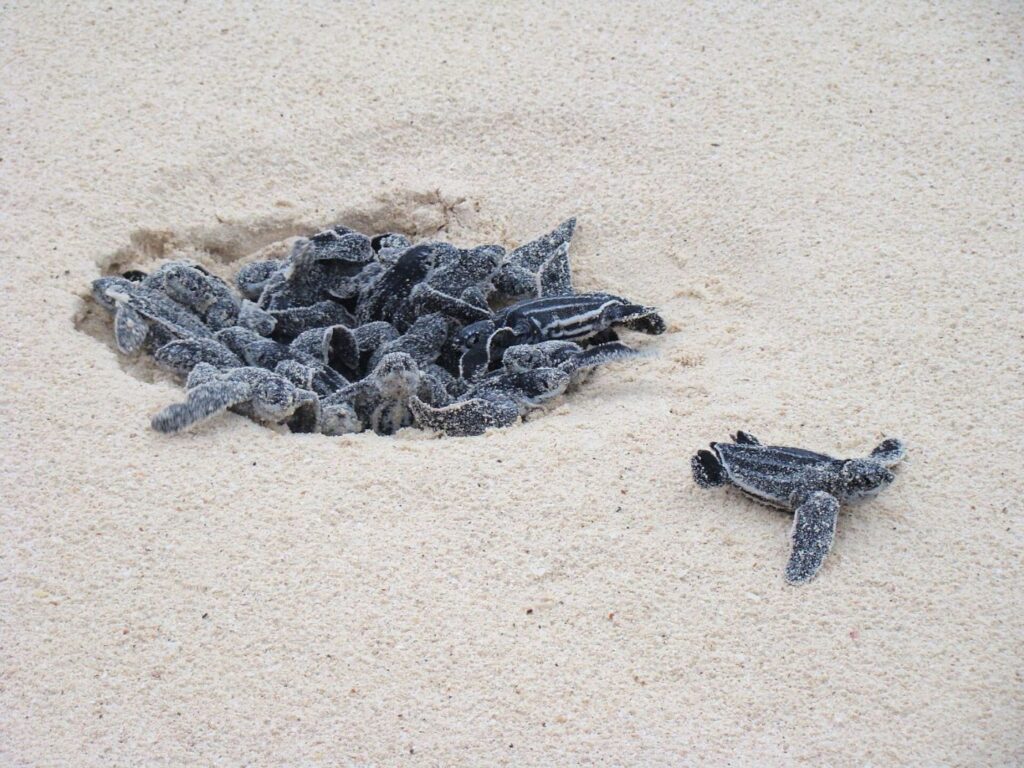
If you walk Eagle Beach early in the morning between spring and late fall, you may spot a patch of sand behind a red-and-white barrier. That is a sea turtle nest. Aruba sea turtles come ashore on the same beaches tourists use every day, which is why a little awareness from visitors makes a real difference.
Here is what is nesting, when, where, and what you should and should not do if you see a turtle or a nest.
Meet the four Aruba sea turtles
Four species use Aruba’s beaches: the leatherback, the green turtle, the loggerhead and the hawksbill. Turtugaruba, the island’s sea turtle foundation, notes that the hawksbill is critically endangered and the green turtle is listed as endangered. All sea turtles in Aruba have been legally protected since 1987.
The leatherback is the one people talk about. It is the giant of the group, and according to VisitAruba it can grow past 2 meters and weigh close to 900 kg. A leatherback female in Aruba can lay more than 115 eggs in a nest and may nest several times in one season.
When is turtle season in Aruba?
The short version: nesting runs roughly March through September, and hatching runs roughly May through November. Aruba.com and VisitAruba both give those windows. Turtugaruba adds that leatherbacks start first, in March, followed by loggerheads, hawksbills and greens, and the season usually wraps up in November once the last nests hatch.
- Incubation: about two months (VisitAruba puts it at 60 to 70 days).
- Digging out: once the eggs hatch, the young turtles can take anywhere from a day or two to several days to dig their way up through the sand.
- Return visits: a female that nests one year usually comes back two to five years later, not every year.
Exact timing shifts from year to year, so if seeing a hatching is the goal of your trip, follow Turtugaruba’s social channels for current activity rather than planning around a fixed date.
Where turtles nest
Eagle Beach is the main nesting beach. Aruba.com says most of the island’s nests are there, and the low-rise hotel stretch is a good place to see laying and hatching activity. Turtugaruba volunteers also patrol Boca Grandi and beaches inside Arikok National Park, and Palm Beach has had the occasional nest.
During the season, Turtugaruba patrols the nesting beaches daily, recording new nests and putting barriers around the ones most at risk.
What to do if you see a nesting turtle or hatchlings
Call the 24-hour turtle hotline: +297 592 9393. That number is listed by Turtugaruba, Aruba.com and VisitAruba. If you cannot call, tell your hotel front desk.
Then step back and let it happen:
- Kill the lights. No flashlights, no phone torch, no flash photos, no video lights. Artificial light can make a female turn back without nesting and can pull hatchlings inland instead of toward the sea.
- Give her room. Watch from a distance and never block her path to the water. An older VisitAruba article suggests at least 10 meters, and notes that nesting can take a couple of hours.
- Hands off. Turtugaruba is clear that handling sea turtles is illegal. Do not pick up hatchlings or “help” them to the water. They need to make that crawl on their own.
Small habits that protect nests
Most of the harm to nests comes from ordinary beach behavior, not bad intentions. A few things to keep in mind during your stay:
- Don’t drive on the sand. Driving on beaches is banned in Aruba anyway, and vehicles compact the sand and can crush eggs.
- Leave nothing on the beach overnight. Chairs, umbrellas and toys can trap a female or block hatchlings. If you have a beachfront room, ask staff to stack furniture back from the waterline.
- Take your trash. Plastic bags and balloons end up in the sea, where turtles mistake them for food. Aruba has also banned many single-use plastics.
- Keep beachfront lights low. If your room or balcony faces the sand, close the curtains at night. Light is one of the biggest problems for nesting turtles and hatchlings.
Seeing turtles in the water
You don’t need to be on the beach at midnight to see a sea turtle. They also live in the water off the beaches. My Aruba Guide notes turtles are sometimes visible in the shallows below Baby Beach, for example. Our clear boat tour stops at Tres Trapi, a spot known for turtles, so non-swimmers in the group get a look through the glass floor too.
The same rules apply in the water. Keep a respectful distance, don’t chase or touch, and never feed them. Aruba’s visitor code of conduct asks people not to feed fish or turtles, or to touch or harass wildlife.
Why every nest counts
Sea turtles play a long game. VisitAruba says they nest every few years, live an estimated 70 to 80 years, and only about 1 in 1,000 hatchlings survives to adulthood. Leatherbacks that nest here spend much of their lives far away in the North Atlantic and come back to their birth beach once they mature. So a nest that gets crushed by a car or a hatchling that crawls toward a hotel light is a real loss.
Who is Turtugaruba?
Turtugaruba was formally set up in 2003, building on volunteer nest protection on Eagle Beach that began in the 1990s. Beyond patrols, the group runs beach clean-ups, school programs, nest temperature research and satellite tracking of nesting females. More than 100 volunteers have helped over the years. They rely on volunteers and donations, so if you enjoy watching a hatching, consider supporting them.
Bottom line: if you visit between March and November, you are sharing the beach with nesting turtles. Keep it dark, keep your distance, keep the sand clear, and save that hotline number in your phone.
Sources
- Turtugaruba: Turtle season in Aruba
- Turtugaruba: Three decades of sea turtle conservation in Aruba
- Aruba.com: How to protect our sea turtles during your vacation
- VisitAruba: How you can help Aruba’s sea turtles
- VisitAruba: The first leatherback sea turtle was spotted on Eagle Beach
- Aruba.com: Eagle Beach
- Aruba.com: Aruba code of conduct
- My Aruba Guide: Rum Reef Cocktail Bar & Grill