Home / Guides / Aruba Beaches
Eagle Beach Aruba: 2026 Guide to Parking, Shade & Turtles
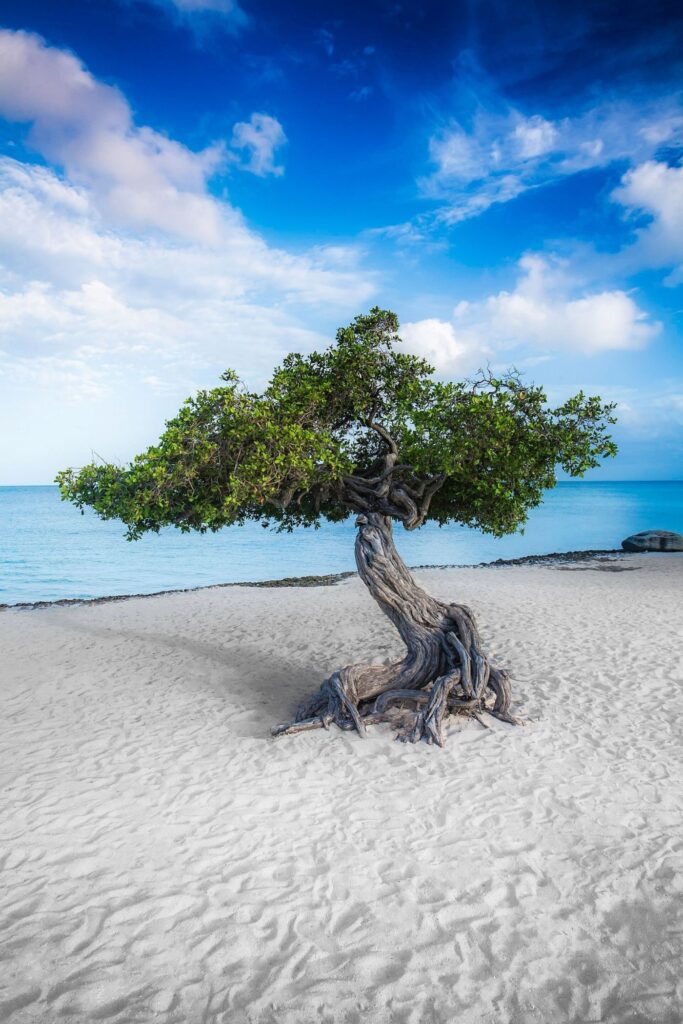
Eagle Beach Aruba is the beach most people picture before they land: a very wide sweep of soft white sand in front of the low-rise hotels, a few minutes north of Oranjestad. It is the island’s widest beach, it is public, and it costs nothing to use. It also has more rules than most visitors realize, mostly because it is the island’s main turtle nesting beach.
This guide covers the practical side: where to leave the car, how to get shade without paying, what the water is really like and how not to annoy the turtle volunteers.
Where Eagle Beach Aruba sits and how to get there
Eagle Beach runs along the coast road between Druif and Manchebo to the south and Palm Beach to the north. The low-rise resorts sit across the road from the sand, so the beach itself feels open rather than walled in by buildings. Frommer’s notes a limestone outcrop separating it from the Palm Beach strip.
Getting there is easy:
- By car: the tourism board describes ample public parking. Use the marked areas. Driving or parking on the sand or the dunes is not allowed.
- By bus: the Arubus from the downtown Oranjestad terminal is a short ride, roughly 10 to 15 minutes according to Beach.com.
- From the airport: a short taxi ride.
- On foot: if you are staying at one of the low-rise hotels, you just cross the road.
Shade: the palapa situation
There is almost no natural shade here, so shade is the thing to plan around. Two kinds of palapa line the beach. Some belong to the hotels and are for their guests. Others are public and free, first come, first served. You are not supposed to drop a towel under a public palapa and wander off for hours to hold it, and locals will notice if you do.
If you want a public palapa on a busy day, arrive early. Otherwise rent an umbrella and chairs from one of the vendors on the sand, or bring your own umbrella. Frommer’s also mentions shaded public picnic areas, which locals use heavily on weekends and holidays.
The fofoti trees
The two wind-bent fofoti trees on Eagle Beach show up on half the postcards on the island. They lean hard toward the sea because the trade winds never really stop. They are protected, and Beach.com specifically says not to hang bags, towels or anything else on them. Take your photo and give them room. Early morning gives you the softest light and the fewest people in the frame.
What the water is like
Most days the sea here is calm and clear enough for an easy swim, and the beach holds Blue Flag certification for water quality according to Beach.com. That said, “calm” is relative. VisitAruba warns the current can be stronger than it looks and tells swimmers to stay inside the designated swimming areas. Do that.
Two things worth knowing before you go in:
- There are no lifeguards. Watch kids closely and don’t swim alone.
- Snorkeling is not the draw. The bottom is mostly sand. For fish, head north to Arashi or Boca Catalina instead.
Sea turtles and the rules that come with them
Four sea turtle species nest on Aruba: leatherback, hawksbill, green and loggerhead. The tourism board says most of the island’s nests are on Eagle Beach. Nesting runs from around March, and the government lists the season stretching as late as December, with hatchlings emerging through roughly November. You will see staked-off nests with signs during these months.
What the government and tourism board ask of beachgoers:
- Keep your distance from nests and from any turtle on the sand. Don’t touch or chase.
- No lights, flashlights or flash photography on the beach at night. Light pulls hatchlings the wrong way.
- Fill in holes you dig and leave the sand flat.
- Take your trash with you.
- If you see a turtle nesting or hatchlings emerging, call Turtugaruba on 592-9393.
Harassing turtles or their nests is illegal under both local and international law, so this isn’t just etiquette.
Other beach rules worth knowing
From Beach.com’s rundown, a few more that catch people out: no bonfires or barbecues, dogs must be on a leash, and topless sunbathing is technically not allowed even if you see it tolerated. Full nudity is illegal. Aruba has also banned sunscreen containing oxybenzone, so pack a reef-safe one.
Facilities
Beach shacks sell drinks and snacks during the day, and there are a couple of bars along the strip. Public restrooms exist but are limited. Most people end up using the restrooms at the beachfront restaurants, so buying a drink is the polite way to do it. Watersports rentals are available from vendors on the beach.
When to go
Eagle Beach is busiest from December through April. Even then, it rarely feels as packed as Palm Beach because there is so much sand to spread out on. Weekdays are calmer than weekends. Easter week is its own thing: local families camp on the beach, which is a long-running island tradition. It is fun to see, but don’t expect a quiet palapa that week.
For the day itself, mornings are best for shade and photos. Late afternoon is the time for sunset, since the beach faces west.
Who Eagle Beach suits
It suits almost everyone who wants a long swim, a long walk and a lot of space. Couples like it for sunset, and families like the width because kids have room to run. It is less good if you want shade without effort, reef snorkeling or a beach-club scene with music. For that last one, Palm Beach is up the road.
Our honest take: go early, claim a public palapa or bring an umbrella, swim inside the designated areas, and stay for sunset. That is a very good Aruba day for zero dollars.
Eagle Beach FAQ
Is Eagle Beach free?
Yes. No permit or entrance fee is needed, and the public palapas are free on a first-come basis. You only pay if you rent chairs, umbrellas or watersports gear.
Can you snorkel at Eagle Beach?
You can, but there is not much to see over the sandy bottom. Snorkelers do better on the northwest coast at Arashi, Boca Catalina or Malmok.